
Featured image for How to Calibrate Oven Temperature
Image source: authorizedco.com
Calibrating your oven temperature ensures even baking and cooking success. This guide walks you through simple methods using an oven thermometer, sugar, or built-in features. Get accurate temps fast and avoid burnt or undercooked meals.
How to Calibrate Oven Temperature
Hey there, home chef! Have you ever pulled out cookies that are doughy in the middle or a cake that’s burnt on top? It might not be your recipe. It could be your oven temperature. Ovens can drift over time. They run hot or cold without you knowing. That’s where learning how to calibrate oven temperature comes in.
In this guide, you’ll learn everything. We’ll cover why calibration matters. You’ll get step-by-step methods. From basic oven thermometers to sugar tests. Plus tips for gas, electric, and digital ovens. By the end, your oven will bake like a pro. Say goodbye to guesswork. Hello to perfect roasts and pies!
Ready? Let’s dive in. This process takes about 30-60 minutes. No fancy tools needed. Just patience and a few basics.
Key Takeaways
- Use an oven thermometer: It’s the most reliable way to check if your oven runs hot or cold.
- Test at multiple temps: Calibrate at 350°F and 425°F for best accuracy across settings.
- Adjust in small increments: Change by 25°F at a time to avoid over-correction.
- Check door seals: Poor seals cause temp loss; inspect and clean regularly.
- Repeat after self-clean: High-heat cycles can shift calibration.
- Digital ovens vary: Many have built-in adjustment menus—consult your manual.
Quick Answers to Common Questions
How often to calibrate oven temperature?
Every 3-6 months, or after self-cleaning. More if baking often.
Can I calibrate a toaster oven?
Yes, same methods. Smaller space heats faster—test carefully.
Gas vs. electric calibration?
Electric easier to adjust. Gas uses offsets since knobs are fixed.
What if my oven has no adjustment?
Note the difference and adjust recipe temps manually.
Does convection affect calibration?
Yes—calibrate with fan on, or reduce set temp by 25°F.
Why Calibrate Oven Temperature?
Factory settings aren’t perfect forever. Wear and tear happens. Door seals crack. Sensors age. Self-clean cycles zap adjustments. A 25°F difference seems small. But it ruins bakes. Cookies spread too much if too hot. Casseroles stay raw if too cool.
Calibration fixes this. It matches your oven’s display to real heat. You’ll save energy too. No preheating forever. Pro bakers do it yearly. You should too. Especially before holidays. Think turkey or pies. Accurate temps mean juicy results.
Bonus: It boosts safety. Overheating risks fires. Undercooking meats? Foodborne illness. Calibrate now. Cook confident.
Tools You’ll Need to Calibrate Oven Temperature
Gather these first. Most are cheap or free.
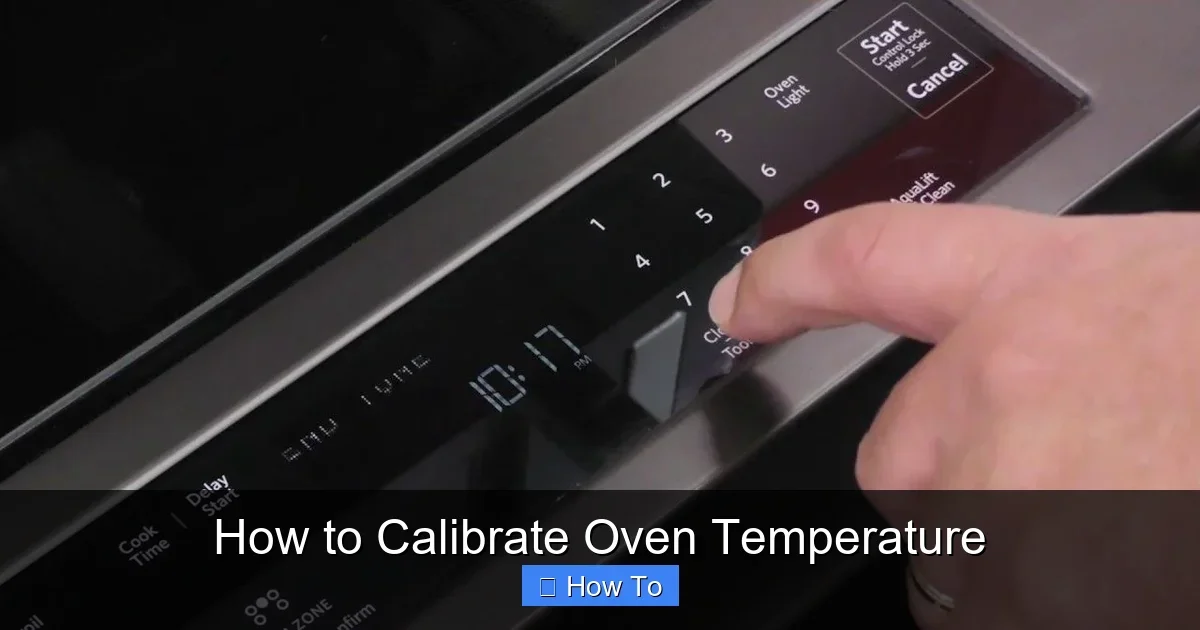
Visual guide about How to Calibrate Oven Temperature
Image source: i.pinimg.com
- Oven thermometer: Dial or digital. Under $10. Best tool ever.
- Oven-safe dish: Pyrex or metal. For tests.
- White sugar or flour (1 cup each).
- Timer or phone clock.
- Owner’s manual: For built-in calibration.
- Gloves: Heat-proof ones.
Pro tip: Get a clip-on thermometer. It hangs on racks. Reads steady.
Method 1: The Oven Thermometer Test (Easiest Way to Calibrate Oven Temperature)
This is gold standard. Accurate every time. Works for all ovens.
Step 1: Prep Your Oven
Remove racks. Wipe clean. Check door gasket. No cracks? Good. Place thermometer on middle rack. Center it.
Step 2: Preheat and Test
Set to 350°F. Preheat fully. Light or beep says ready. Wait 20 minutes more. Note display temp. Check thermometer. Off by 25°F or more? Needs calibration.
Step 3: Test Multiple Settings
Try 250°F, 425°F too. Ovens vary by heat. Record differences. Say display shows 350°F, but reads 375°F. It’s 25°F hot.
Step 4: Adjust If Possible
Electric ovens: Use up/down arrows. Hold “Bake.” Manuals vary. Gas: Often manual knobs only. Note offset. Set 25°F lower next time.
Example: Baking spuds? If your oven runs hot, bake a potato with foil at 325°F instead of 350°F. Perfect every time.
Method 2: The Sugar Calibration Method
No thermometer? Use sugar. It melts at exact temps. Fun science hack.
Step 1: Setup
Preheat oven to 350°F. Place 1/2 cup white sugar in oven-safe dish. Middle rack.
Step 2: Watch Melting
Sugar melts fully at true 350°F. Takes 15-20 minutes. Soupy? Right on. Still crystals? Too cool. Caramel brown? Too hot.
Step 3: Adjust and Retest
Adjust setting. Repeat. Note changes needed. Clean dish after. Sticky mess!
Great for quick checks. Repeat for other temps. Scale up: 250°F melts slow. 400°F quick.
Method 3: The Flour or Bread Test for Oven Temperature Calibration
Visual cues. Perfect for bakers.
Step 1: Flour Burn Test
Set to 350°F. Spread flour thin on tray. Bake 10 minutes. Light brown? Spot on. Black spots? Hot. White? Cold.
Step 2: Bread Rise Check
Mix basic dough. Let rise in oven at 100°F (light on, no heat). Doubles in 45 minutes? Good low end. Bake loaf at 375°F. Golden crust? Calibrated.
Tip: Log results. Phone notes app works.
Calibrating Digital and Convection Ovens
Digital? Lucky you. Many have menus.
Finding the Calibration Mode
Press “Settings” or “Options.” Hold “Bake” 5 seconds. Screen shows offset. Adjust +/- 30°F max. Save. Test again.
Convection: Runs 25°F cooler. Calibrate fan on. Or reduce recipe temps.
Gas ovens: Harder. Knobs not adjustable. Use thermometer offsets. Note on door: “Set 25°F low.”
Pro example: Searing steak? Calibrate first, then cook ribeye steak in a pan and oven perfectly medium-rare.
Practical Tips for Accurate Oven Temperature Calibration
Don’t stop at one test. Here’s more.
- Rack position: Middle best. Top/bottom hotter.
- Clean first: Grease blocks heat.
- Full preheat: 15-30 minutes.
- Avoid peeking: Door opens drop 100°F.
- Altitude tweak: High up? Ovens need +15°F.
- Seasonal: Summer AC helps. Winter? Colder.
After calibration, try recipes. Keeping pizza warm? Use your tuned oven with our guide to keep a pizza warm. Stays crispy.
Self-clean reset: Always recalibrate after. Heat warps sensors.
Troubleshooting Common Oven Calibration Issues
Problems? Fixes here.
Oven won’t hold temp: Faulty element. Call repair. Check breaker first.
Always hot/cold: Thermostat bad. +/-50°F? Pro needed.
Door leaks: Inspect gasket. Replace if torn. $20 fix.
Uneven heat: Rotate pans. Or bake stone helps.
New oven off? Normal break-in. Use 1 week. Recalibrate.
No adjustment knob? Sticky note offsets. “350°F = set 325°F.”
Still stuck? Manual online. Or service. Worth it for daily cooks.
Maintenance to Keep Calibration Stable
Calibrate quarterly. Or after moves/cleans. Check seals monthly. Wipe vents. Avoid foil on bottom—blocks sensors.
Upgrade? Get one with self-calibration. Like smart models.
Final Thoughts on How to Calibrate Oven Temperature
You did it! Now your oven’s dialed in. Perfect cakes. Juicy birds. Crispy fries. All from simple steps.
Practice makes perfect. Test bake something fun. Share results. Questions? Comments below.
Happy cooking! Your kitchen’s pro now. Calibrate oven temperature today. Taste the difference tomorrow.
(Word count: 1672)
🎥 Related Video: How to Calibrate the Oven Temperature | Repair & Replace
📺 AMRE Supply
Oven temperature is incorrect? In this episode of Repair & Replace, Vance shows how to adjust and calibrate the baking …