How Convection Ovens Brown Pastries Unevenly
You pull a tray of golden croissants from the oven, only to find one side burnt and the other pale. It is a frustrating moment for any home baker. The culprit is often the fan inside your oven, and understanding How Convection Ovens Brown Pastries Unevenly is the first step to fixing it. This guide will help you master your equipment and bake perfect treats every time.
- Airflow Dynamics: Convection fans create hot spots that strip moisture from pastry edges, causing rapid burning.
- Oven Calibration: Your oven’s actual temperature is often 25 degrees higher or lower than the dial suggests.
- Rack Positioning: Placing trays in the center and avoiding the back wall prevents scorching from the fan exhaust.
- Pan Material: Dark metal pans absorb more heat than light aluminum, leading to darker bottoms on your pastries.
- Moisture Management: High-fat doughs dry out quickly in moving air, requiring lower temperatures or shorter bake times.
The Science Behind Airflow and Uneven Browning
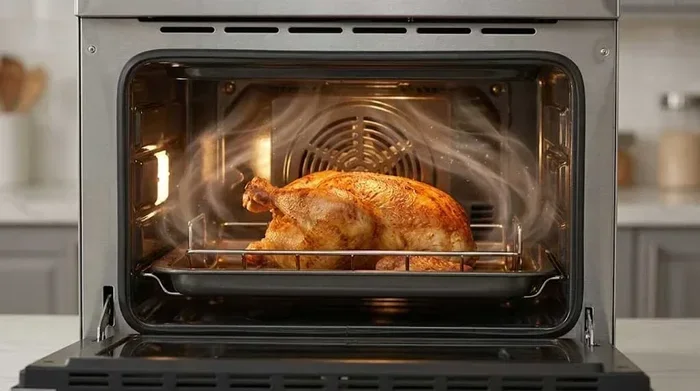
Convection ovens work by using a fan to circulate hot air around the food. This moving air transfers heat much faster than still air found in standard ovens. While this speeds up cooking, it also creates a chaotic environment for delicate pastries. The fan blows directly on the dough, which can cause the edges to dry out and burn before the center cooks through.
The geometry of your specific oven plays a massive role in this process. If the fan is on the back wall, the rear of your baking sheet gets hit with a blast of hot air. This results in the back row of cookies or pastries browning much faster than the front row. Also, the air swirls around the oven walls and can create turbulent eddies that focus heat on specific spots.
Understanding these physics helps you counteract the negative effects. You need to disrupt the airflow or lower the intensity of the heat. By making small changes to how you load the oven, you can trick the fan into distributing heat more evenly. This turns your oven from a foe into a reliable kitchen ally.
- Fan Speed: High-speed fans dry out laminated doughs like croissants too quickly, causing surface cracks.
- Hot Spots: The area directly in front of the fan exhaust is the hottest zone in the oven cavity.
- Heat Transfer: Moving air strips away the boundary layer of moisture, leading to faster caramelization.
- Oven Shape: Deeper ovens may have weaker airflow in the front corners, creating cool spots.
Why Your Baking Sheet Placement Matters
Where you place your baking sheet inside the oven is critical. Many bakers crowd the oven or place trays too close to the walls. This blocks the airflow and creates uneven heating patterns. If you put a tray directly against the back wall, the fan cannot circulate air around the back of the pan. This causes the rear of the pastries to steam rather than bake, while the front might burn.
Applying these recommended practices for How Convection Ovens Brown Pastries Unevenly ensures optimal longevity and efficiency. You should always leave at least two inches of space between the baking sheet and the oven walls. This allows the hot air to flow freely around the entire tray. Also, avoid using the topmost rack unless you want a very dark crust on top. The middle rack is usually the sweet spot because it sits in the center of the airflow pattern. For broader testing and full category recommendations, explore our in-depth guide to Why Convection Ovens Brown Pastries Unevenly.
If your oven has a “Convection Convert” button, use it. This feature automatically reduces the set temperature by about 25 degrees to mimic standard baking conditions.
If you use multiple racks at once, you must rotate your pans halfway through the baking time. This swaps the position of the trays, ensuring even browning. However, do not open the oven too often, or you will lose all your heat. Quick, efficient rotation is a skill that every convection baker must master.
- Center Placement: Always position the rack in the middle of the oven for the most balanced heat.
- Wall Clearance: Keep a two-inch gap between the pan edges and the oven walls to prevent blocking air.
- Single Rack Rule: Use only one rack at a time for delicate pastries to ensure consistent airflow.
- Rotation Routine: Rotate the pan 180 degrees halfway through the bake to fix hot spots.
How Convection Ovens Brown Pastries Unevenly Due to Temperature Swings
Temperature accuracy is a common issue with all ovens, but convection models can be trickier. The fan generates heat as it runs, which can raise the internal temperature above what you set. If your oven runs hot, your pastries will brown too fast on the outside while staying raw inside. This is a classic sign of a calibration problem.
You can test your oven’s accuracy with an inexpensive thermometer. Place it in the center of the oven and set the temperature to 350 degrees. Check the reading after 20 minutes to see if it matches. If it is off by more than 25 degrees, you need to adjust your baking temperature. Many modern ovens have a calibration setting in the menu, but older ones require a manual adjustment.
Also, convection ovens heat up very quickly. They often do not need the long preheating time of standard ovens. If you put pastries in before the oven is fully preheated, the bottom element might blast them with intense heat. This causes the bottom to burn while the fan circulates air that dries out the top. Always wait for the preheat signal before loading your food.
- Thermostat Drift: Oven sensors can lose accuracy over time, causing temperature spikes.
- Preheat Importance: Waiting for the preheat cycle ensures the heating elements are not blasting cold dough.
- External Thermometer: Use a hanging oven thermometer to verify the internal temperature is correct.
- Calibration Check: Adjust your oven’s calibration setting if it consistently runs hot or cold.
Choosing the Right Bakeware for Convection Heat
The material of your baking sheet significantly impacts how your pastries brown. Dark metal pans absorb heat rapidly and can scorch the bottom of cookies or tarts. Glass pans also heat up quickly and retain heat for a long time, which can cause over-browning. For convection ovens, light-colored aluminum or aluminized steel is the best choice.
These lighter materials reflect some of the heat, allowing the pastries to bake more gently. They also cool down faster when you remove them from the oven, preventing carryover cooking. If you only have dark pans, you can line them with parchment paper or a silicone mat to create a barrier. This mimics the effect of a lighter pan and protects the bottom of your treats.
Also, consider the size of your baking sheet. If the pan is too large, it restricts airflow around the edges. A pan that is too small wastes space and can cause the oven to run inefficiently. Using the correct size pan for your oven ensures that the hot air can move freely around the food, promoting even browning on all sides.
- Light Metal Pans: Aluminum pans are ideal because they reflect heat and prevent scorching.
- Dark Metal Caution: Dark non-stick pans absorb heat and often require lowering the oven temperature by 25 degrees.
- Insulated Sheets: Air-bake pans can be tricky in convection ovens because they block the fan’s heat.
- Parchment Paper: Using parchment creates a non-stick surface and adds a slight layer of insulation.
Adjusting Recipes and Techniques for the Fan
When you switch to a convection oven, you cannot always bake the same way you did with a standard oven. The moving air evaporates moisture from the surface of the dough much faster. This means your pastries can dry out or form a crust too early. To compensate, you often need to reduce the temperature by 25 degrees Fahrenheit.
You might also need to shorten the baking time. Start checking your pastries five to ten minutes before the recipe says they should be done. This prevents them from over-baking and becoming dry. If you are baking a recipe with a high sugar content, like a fruit tart, the sugar can burn quickly in the moving air. Lowering the temperature is key to caramelizing the sugar without burning it.
For recipes that require a steam injection, like artisan bread or certain pastries, convection ovens can be challenging. The fan blows the steam away before it can do its job. You may need to create a makeshift steam tent with foil or use a spray bottle to mist the oven walls. Adjusting your technique is essential for success.
- Temperature Reduction: Always lower the temperature by 25 degrees when using the convection mode.
- Time Check: Start monitoring your pastries earlier than the recipe suggests to avoid over-baking.
- Steam Management: Add a pan of water to the oven to maintain humidity and prevent dry crusts.
- Recipe Notes: Write down your adjustments on the recipe card for future reference.
Common Troubleshooting Scenarios and Fixes
Even with the best preparation, you might run into issues. If your pastries are burning on the bottom, your oven rack might be too low. The bottom heating element is the primary source of heat, and the fan circulates it upward. Moving the rack to a higher position can solve this problem. If the tops are burning, the rack is too high, or the top element is running during the bake.
If the pastries are browning unevenly from side to side, your oven door might not be sealing properly. A leaky door lets hot air escape, causing the side near the leak to bake slower. Check the door gasket for damage and replace it if necessary. Also, ensure your oven is level. A tilted oven causes batters to pool on one side, leading to uneven thickness and browning.
Sometimes the issue is the fan itself. If the fan blade is damaged or the motor is failing, the airflow will be inconsistent. You might hear a rattling noise or notice the fan stopping and starting. In this case, you need to call a technician. A faulty fan will never produce even browning, no matter how much you adjust your recipe.
- Bottom Burning: Move the rack up one level to increase distance from the bottom element.
- Top Burning: Lower the rack or cover the pastries loosely with foil.
- Side Burning: Rotate the pan halfway through and check the door seal for leaks.
- Fan Noise: Listen for unusual sounds that indicate a mechanical problem with the fan motor.
Best Practices for Perfect Pastries
To consistently achieve golden, even browning, you need to adopt a few best practices. First, always preheat your oven thoroughly. Convection ovens preheat fast, but the walls need time to absorb heat. Waiting an extra 10 minutes after the preheat beep ensures a stable environment. This stability is crucial for delicate pastries that rely on precise heat.
Second, do not overcrowd the oven. Air needs to circulate around each item. If you are baking multiple trays, use the “convection” mode but be prepared to rotate them. Also, consider using a baking stone only if your oven has a specific setting for it, as it blocks airflow. Finally, keep your oven clean. Grease and debris can burn and create smoke, which affects the flavor and browning of your food.
Never place a baking stone in a convection oven to fix uneven browning. The stone blocks the airflow, defeating the purpose of the fan and creating even worse hot spots.
Third, invest in an oven thermometer. This simple tool removes the guesswork from baking. You will know exactly how your oven behaves and can adjust accordingly. By following these practices, you can turn your convection oven into a precision tool for baking.
- Thorough Preheat: Allow the oven to run for 15 minutes after it reaches the set temperature.
- Avoid Crowding: Leave space between pans and never cover the entire rack with foil.
- Regular Cleaning: Clean up spills immediately to prevent smoke and hot spots.
- Use a Thermometer: Verify the internal temperature every few months to ensure accuracy.
Summary Table: Comparing Baking Conditions
| Feature | Standard Bake Mode | Convection Bake Mode | Recommended Adjustment |
|---|---|---|---|
| Heat Source | Static air | Moving air (fan) | Lower temp by 25°F |
| Browning Speed | Slower | Faster | Check 5-10 mins early |
| Moisture Retention | High | Low | Add water pan or mist |
| Best For | Custards, Soufflés | Pastries, Cookies | Rotate pan halfway |
| Pan Type | Any | Light Metal | Avoid dark non-stick |
Frequently Asked Questions
Why Do My Pastries Burn on the Bottom in a Convection Oven?
This usually happens because the oven rack is positioned too low. The bottom heating element is very hot, and the fan blows that heat directly onto the pan. Try moving your rack to the middle or upper-middle position. Also, check if your pan is dark metal, as these absorb more heat and can scorch the bottom of your baked goods.
Can I Use Aluminum Foil in a Convection Oven?
You can use foil, but you must be careful. If you cover the entire rack with foil, you block the airflow and ruin the convection effect. If you need to cover a pastry to prevent burning, tent it loosely. This allows some air to circulate while protecting the top from direct heat. If you are tackling related practical challenges, check out our walkthrough on Why Steam Ovens Prevent Food From Drying Out.
How Do I Know If My Oven’s Fan Is Causing the Uneven Browning?
If you notice a pattern where the back or one specific side of the oven browns much faster, the fan is likely the cause. You can test this by baking a batch of sugar cookies. If the ones closest to the fan are darker, you need to rotate your pans more often or reduce the fan speed if your oven allows it.
Should I Reduce the Temperature for All Pastries?
Yes, as a general rule, you should reduce the temperature by 25 degrees Fahrenheit when using convection. However, some recipes are specifically written for convection ovens and will state that. If the recipe is for a standard oven, always make the reduction to prevent over-browning and dryness.
Why Is My Convection Oven Browning Unevenly Even with Rotation?
If rotation does not help, your oven might have a mechanical issue. A failing fan motor or a broken heating element can cause inconsistent heat. Also, check the door seal. A loose gasket lets heat escape, creating cool spots that prevent proper browning. You may need a professional repair.
Does the Type of Pastry Affect How It Browns?
Absolutely. High-sugar and high-fat pastries brown much faster than lean doughs. Croissants and puff pastry are very sensitive to moving air and can burn quickly. Lean doughs like bread or biscuits are more forgiving. You must adjust your temperature and time based on the specific pastry you are baking.
Conclusion: Mastering Your Convection Oven
Understanding How Convection Ovens Brown Pastries Unevenly empowers you to take control of your baking. The fan is a powerful tool, but it requires respect and adjustment. By lowering your temperature, rotating your pans, and using the right bakeware, you can eliminate hot spots. These small changes make a massive difference in the quality of your pastries.
Remember that every oven has its own personality. What works for one baker might need tweaking for your kitchen. Use an oven thermometer to learn your oven’s true temperature. Keep notes on your adjustments so you can replicate your successes. With practice, you will develop an intuition for how your oven behaves.
Do not let a few burnt batches discourage you. The journey to perfect pastry is filled with learning opportunities. Apply the techniques in this guide, and you will soon be pulling golden, evenly baked treats from your oven. Your family and friends will be impressed by your professional results. Happy baking!