
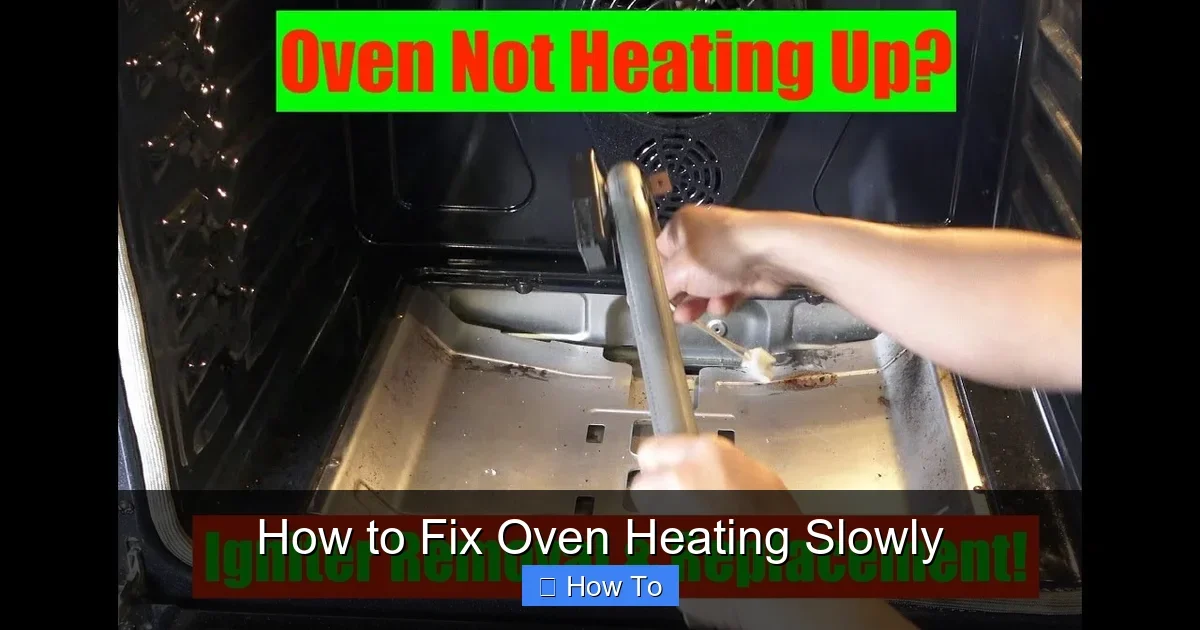
Featured image for How to Fix Oven Heating Slowly
Image source: i.ytimg.com
Is your oven heating slowly ruining dinner plans? This guide walks you through simple checks and fixes to restore quick preheating. You’ll save time and money without calling a pro.
How to Fix Oven Heating Slowly
Hey there, home cook! Nothing’s worse than an oven heating slowly when you’re craving fresh cookies or a roast chicken. It wastes time and energy. But don’t worry. In this guide, you’ll learn why it happens and how to fix it step by step. We’ll cover safety tips, easy DIY checks, and when to call a pro. By the end, your oven will preheat like new. Let’s get cooking!
Key Takeaways
- Check basics first: Ensure power supply and settings are correct before diving deeper.
- Clean thoroughly: Built-up grease blocks heat; a good scrub often solves oven heating slowly issues.
- Inspect elements: Look for damage or burnout in bake and broil elements.
- Test door seal: A worn gasket lets heat escape, slowing preheat times.
- Calibrate thermostat: Off temps make ovens work harder and heat slower.
- Know when to call help: Gas igniters or wiring need pros for safety.
Quick Answers to Common Questions
Normal preheat time?
10-15 minutes to 350°F. Longer signals oven heating slowly.
Oven thermometer needed?
Yes! $10 tool confirms true temps.
Self-clean safe?
Yes, if manual allows. Avoid foil inside.
Element replacement easy?
Yes, 30 minutes. Match wattage exactly.
Gas igniter DIY?
Test yes, replace maybe. Pro for safety.
Understand Why Your Oven Heats Slowly
Before fixing, know the causes. Ovens heat slowly from dirt buildup, bad parts, or age. Electric ovens rely on elements. Gas ones use igniters. Common culprits include:
- Dirty interior blocking heat.
- Faulty heating elements.
- Worn door seals leaking heat.
- Miscalibrated thermostat.
- Weak igniter (gas ovens).
Fixing oven heating slowly starts with safety. Unplug electric ovens. Turn off gas. Wear gloves. Now, dive in.
Step 1: Check Power and Basic Settings
Start simple. Many slow heats come from user error.
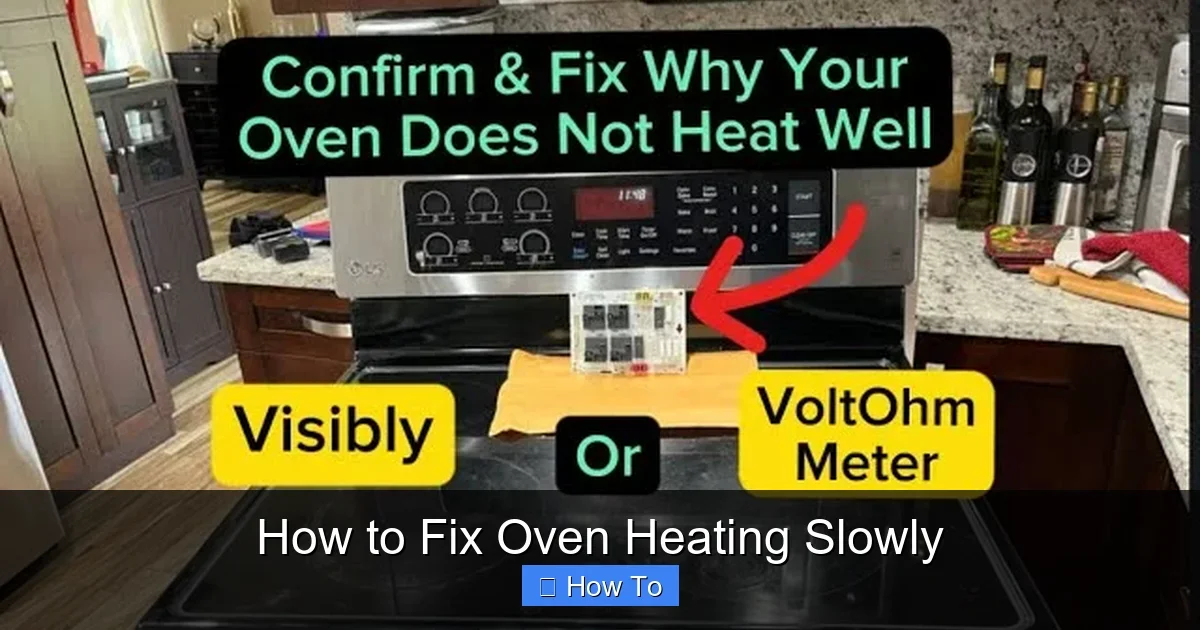
Visual guide about How to Fix Oven Heating Slowly
Image source: i.ytimg.com
Verify Power Supply
For electric ovens, ensure it’s plugged in tight. Check breakers. A tripped one slows heating. Reset if needed. Gas ovens? Confirm gas is on and pilot lit if applicable.
Test Settings
Set to 350°F. Time preheat. Normal is 10-15 minutes. Over 20? Problem confirmed. Avoid bakeware inside during preheat. It blocks air flow.
Tip: Use an oven thermometer. Cheap and accurate. Place it inside. Compare to dial. Off by 25°F? Note for later.
Step 2: Clean Your Oven Thoroughly
Grease and crumbs insulate. Heat can’t spread. Cleaning fixes 40% of oven heating slowly cases.
Self-Cleaning Cycle
If your model has it, run a cycle. Follow manual. It pyrolizes gunk at 900°F. Wait 4-6 hours cool down. Wipes easy after.
Manual Cleaning
No self-clean? Mix baking soda and water paste. Spread inside. Let sit overnight. Scrub with vinegar. Rinse. Focus on bottom, walls, and racks.
- Remove racks first.
- Use plastic scraper for stuck bits.
- Dry fully before testing.
Pro tip: Clean monthly to prevent oven heating slowly. Test preheat post-clean. Faster already?
Step 3: Inspect and Test Heating Elements
Elements glow red when working. Burnt or loose ones heat slow.
Visual Check
Turn on bake. Look through window. Both top (broil) and bottom (bake) should glow evenly. Dull or no glow? Bad element.
Test with Multimeter
Unplug oven. Remove element screws. Pull out. Set multimeter to ohms. Touch probes to terminals. 15-30 ohms normal. Infinite? Replace.
Buy matching part online or store. Install reverse steps. Cost: $20-50. DIY in 30 minutes.
Example: My old oven’s bottom element frayed. Replaced it. Preheat dropped from 25 to 12 minutes.
Step 4: Check the Door Seal and Hinges
Seal keeps heat in. Cracked rubber lets it escape. Oven works overtime.
Inspect Gasket
Open door. Pinch seal. Should spring back firm. Tears or flat spots? Replace. $10-20 part.
Clean and Align Door
Wipe seal with soapy water. Check hinges for bends. Tighten screws. Close door. Light test: Dark inside? Good seal. Light leaks? Fix.
Replacement: Pull old gasket clips. Snap new one. 15 minutes tops.
Step 5: Calibrate the Thermostat
Dials drift over time. Oven thinks it’s hotter, so elements cycle less. Heats slow.
For Analog Knobs
Buy calibration screw tool or pliers. Preheat to 350°F. Use thermometer. Adjust screw 1/4 turn clockwise to increase heat. Retest.
Digital Ovens
Enter settings mode. Hold bake 5 seconds. Adjust offset. Manuals vary. Check yours.
Recalibrate yearly. Solves subtle oven heating slowly.
Step 6: Gas Oven Specific Fixes
Gas ovens have igniters. Weak ones glow but don’t click fully. Slow flame.
Test Igniter
Turn on bake. Igniter glows orange? Wait for click. No click in 90 seconds? Bad. Amps test: Multimeter in series. 2.5-3.5 amps good. Lower? Replace $30-60.
Clean Burner
Remove bottom panel. Vacuum ports. Avoid bending.
Gas scares folks. If unsure, call pro.
Troubleshooting Common Issues
Not fixed? Dig deeper.
- Convection fan bad: Stops air flow. Listen for spin. Replace motor.
- Control board glitch: Resets fix most. Unplug 5 minutes.
- Overloaded circuit: Microwave on same? Unplug others.
- Old oven: 10+ years? Parts wear. Weigh repair vs. new.
Test fix: Preheat to 350°F. Time it. Bake test: Try a simple recipe like our how to bake a potato with foil in the oven guide. Even heat?
Another check: Sear a steak using tips from how to cook ribeye steak in a pan and oven. Quick broil confirms top element.
For low-temp holds, see how to keep a pizza warm in the oven. Steady temp means success.
Safety Tips and When to Call a Professional
Always unplug before work. Gas? Shut valve. Smell gas? Evacuate, call utility.
DIY limits: Wiring, boards, gas lines. Pros charge $100-200 diagnostic. Parts extra.
Irreparable? Consider upgrades. Modern ovens preheat faster, save energy.
Conclusion
You did it! Your oven heating slowly is fixed. Quick preheats mean better meals. Maintain by cleaning often, calibrating yearly. Now bake away. Questions? Drop a comment. Happy cooking!
(Word count: 1628)