
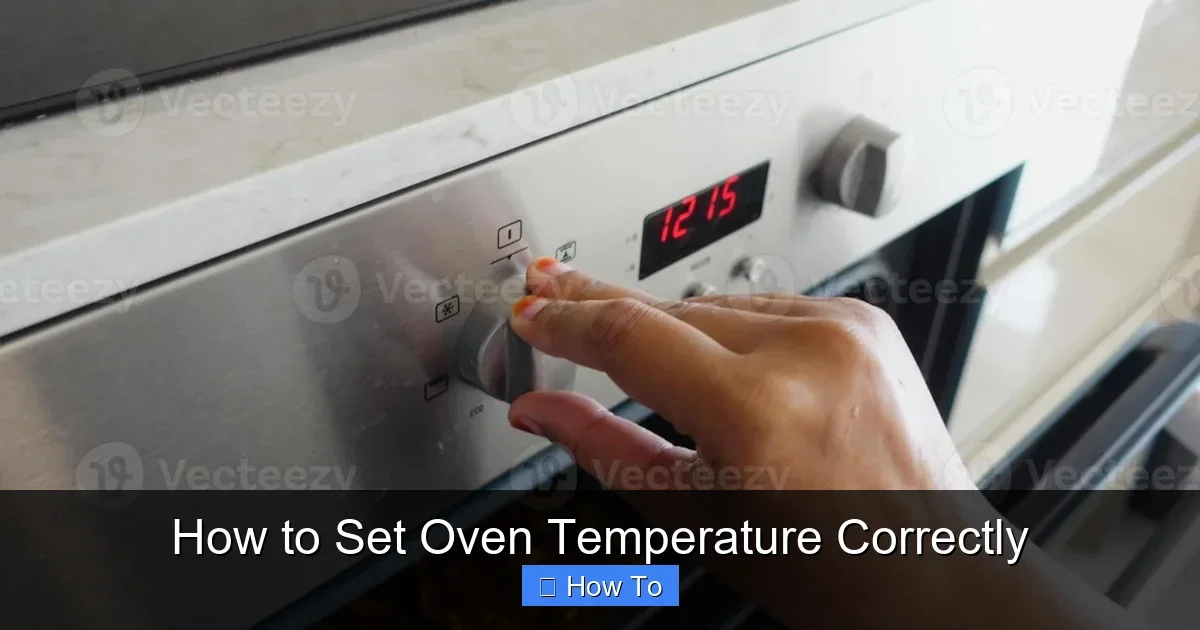
Featured image for How to Set Oven Temperature Correctly
Image source: static.vecteezy.com
Setting your oven temperature correctly is key to perfect cooking results. This guide walks you through steps for all oven types, calibration tips, and troubleshooting. Avoid burnt or undercooked food with these simple instructions. (89 words)
How to Set Oven Temperature Correctly
Hey there, home cook! Have you ever pulled a cake out of the oven that’s raw in the middle or burnt on top? Or maybe your roast came out unevenly cooked? That’s often because you didn’t know how to set oven temperature correctly. Don’t worry—this guide has you covered.
In this complete how-to, you’ll learn everything from basic steps to set oven temperature on any model, to calibrating for precision, troubleshooting issues, and real recipe examples. By the end, you’ll bake like a pro. Let’s dive in and get your oven working perfectly.
Key Takeaways
- Preheat fully: Always allow 10-20 minutes for the oven to reach the set temperature before adding food.
- Use an oven thermometer: Built-in dials can be off by 25°F or more; verify accuracy.
- Understand modes: Bake for even heat, convection for faster cooking with air circulation.
- Calibrate if needed: Adjust older ovens by 15-50°F based on thermometer readings.
- Position racks right: Middle rack for most baking; lower for roasting meats.
- Troubleshoot hot/cold spots: Rotate trays midway for uniform results.
- Check manual: Specific models like Blomberg ovens have unique digital controls.
Quick Answers to Common Questions
Always preheat?
Yes! It ensures even cooking from the start. Skip only for quick broils.
Oven thermometer worth it?
Absolutely. Cheap insurance against bad bakes. Place it center rack.
Convection or regular?
Use convection for roasts and cookies. Drop temp 25°F for best results.
High altitude adjust?
Increase temp 15-25°F. Recipes often note it, but tweak as needed.
Door open too long?
Temp drops fast. Close quick and add 5 minutes to time.
Why Accurate Oven Temperature Matters
Getting the right heat is the heart of good cooking. Ovens can vary by up to 50°F from the dial setting. That small difference ruins cookies, dries out chicken, or leaves bread doughy.
When you learn how to set oven temperature correctly, food cooks evenly. Cakes rise tall. Meats stay juicy. Veggies crisp just right. Plus, it saves energy—no need to recook failures.
Pro tip: Always use recipes with tested temps. For instance, most cakes need 350°F. Roasts often hit 375°F. We’ll cover specifics later.
Understand Your Oven Type
Not all ovens are the same. Knowing yours helps you set oven temperature spot-on.
Visual guide about How to Set Oven Temperature Correctly
Image source: wolftopchoiceappliancerepair.com
Electric Ovens
These use coils top and bottom. Heat is steady but slow to adjust. Digital models show exact temps.
Gas Ovens
They heat fast with a broiler flame. Watch for uneven heat near the flame.
Convection Ovens
A fan circulates air. Food cooks 25% faster. Reduce temp by 25°F or time by 25% from standard recipes.
Check your manual. Some, like the Blomberg oven, have smart digital panels for easy setup.
Step-by-Step: How to Set Oven Temperature
Ready for the core? Here’s how to set oven temperature correctly, step by step. It takes under a minute.
Step 1: Preheat the Oven
Turn the oven on. Select “Bake” mode unless broiling. Twist the dial or tap the digital pad to your target temp, like 400°F.
Wait for the preheat light or chime—usually 10-20 minutes. Peek with an oven thermometer to confirm.
Step 2: Position the Rack
- Middle rack for cakes, cookies, casseroles.
- Lower for pies, roasts.
- Upper for broiling.
Step 3: Set the Temperature
For analog dials: Align the mark with your temp.
For digital: Press “Bake,” enter numbers (e.g., 375), hit “Start.” Screen shows current vs. set temp.
Pro move: Set 25°F higher for convection if recipe doesn’t specify.
Step 4: Verify with a Thermometer
Place a $10 oven thermometer inside. It should match the dial after preheat. Adjust if off (more on calibration next).
Calibrating Your Oven for Precision
Many ovens drift over time. Learn how to set oven temperature correctly by calibrating.
Tools needed: Oven thermometer, screwdriver (for some models).
- Heat to 350°F. Let stabilize 20 minutes.
- Check thermometer. Say it’s 25°F low.
- For digital: Hold “Bake” 5 seconds. Adjust +25°F. Save.
- For analog: Note offset. Set dial 25°F higher next time.
Test at 250°F and 450°F too. Recalibrate yearly or after moves.
Common Oven Modes and Settings
Beyond basic bake:
- Broil: Top heat only. Great for melting cheese. Set to High (500°F+).
- Convection Bake: Fan + bake. Ideal for cookies.
- Warm: 170-200°F. Holds food without cooking more.
- Self-Clean: 900°F. Don’t use for cooking!
Always set oven temperature to match the mode. Recipes specify.
Practical Tips to Set Oven Temperature Like a Pro
Small habits make big differences:
- Use glass or dark pans? Drop temp 25°F—they absorb more heat.
- High altitude? Add 15-25°F or 5 minutes per hour.
- Avoid peeking early—it drops temp 100°F!
- Rotate trays front-to-back halfway for even bake.
- For frozen foods, set oven temperature higher initially, then lower.
Example: Baking potatoes? Set to 425°F with foil for crispy skin. Check our how-to bake a potato with foil in the oven for details.
Troubleshooting Oven Temperature Problems
Oven acting up? Here’s how to fix common issues when trying to set oven temperature correctly.
Oven Runs Too Hot
Symptoms: Burnt edges. Fix: Calibrate down 25°F. Check seals.
Oven Too Cool
Undercooked centers. Calibrate up. Ensure door closes tight.
Uneven Heating (Hot/Cold Spots)
Use thermometer in corners. Rotate food. Avoid overcrowding.
No Preheat Chime
Some models don’t have it. Rely on thermometer.
Digital Display Errors
Unplug 5 minutes. Check manual. Call pro if persists.
For meats like ribeye, precise temps prevent overcooking. See how to cook ribeye steak in a pan and oven.
Real Recipe Examples: Applying the Right Oven Temperature
Let’s apply what you’ve learned. Here are temps for popular dishes:
Baking Cookies: Set oven temperature to 375°F (convection 350°F). 8-10 minutes. Middle rack.
Roasting Veggies: 425°F. Toss in oil. 20-25 minutes. Flip halfway.
Drying Peppers: Low and slow at 140°F. Door cracked. Perfect for spices—try our how to oven dry hot peppers.
Cake Layer: 350°F. 25-30 minutes. Don’t open door first 20.
Reheating Leftovers: 325°F to avoid drying. Like smoked turkey at 250°F low.
Practice these, and you’ll master how to set oven temperature for any recipe.
Advanced Tips for Frequent Bakers
Batch baking? Set oven temperature once, but preheat extra. Use multiple racks, swap midway.
For toasters or wall units: Smaller space heats faster. Set oven temperature 25°F lower.
Energy saver: Match set oven temperature to recipe exactly—no guessing.
Conclusion: Bake with Confidence
There you have it—your full guide on how to set oven temperature correctly. From preheating basics to troubleshooting, you’re set for success. Grab that thermometer, calibrate today, and watch your food transform.
Next time you bake, remember: Right temp equals right results. Happy cooking! Share your wins in comments.
(Word count: 1624)