
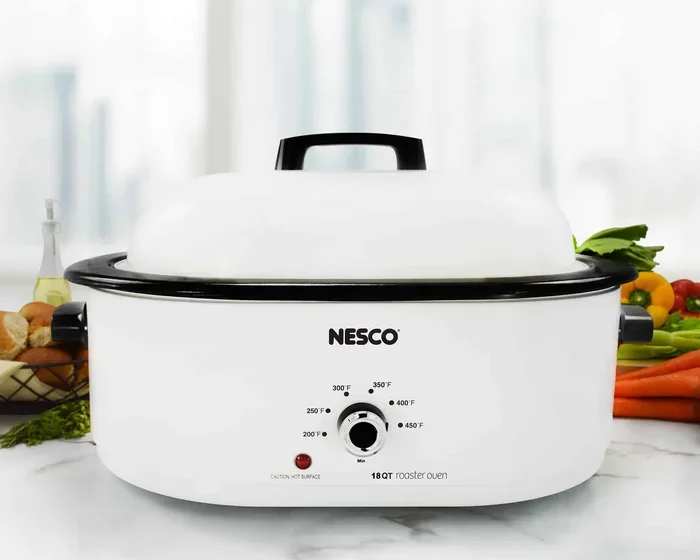
Nesco Roaster Oven How to Use
Learning how to use a Nesco roaster oven opens up a world of convenient, energy-efficient cooking. This guide covers everything from setup to advanced techniques, including temperature settings, rack placement, and delicious recipes. Whether you’re slow-cooking a roast or baking cookies, mastering this versatile appliance will transform your kitchen routine.
If you’ve just purchased a Nesco roaster oven or you’ve had one sitting on your countertop feeling underused, you’re in for a treat. This countertop appliance is one of the most versatile tools you can own. It roasts, bakes, slow cooks, steams, and even dehydrates — all while using less energy than your full-size oven. Learning how to use a Nesco roaster oven properly will help you prepare everything from holiday turkeys to weeknight casseroles with ease.
Many home cooks underestimate what a roaster oven can do. They think it’s just for Thanksgiving turkey. But that couldn’t be further from the truth. Once you understand the basics — temperature control, rack placement, and cooking times — you’ll find yourself reaching for it almost daily. Let’s dive into everything you need to know.
Key Takeaways
- Always preheat your Nesco roaster oven for 15-20 minutes before cooking for best results.
- Use the included racks strategically to cook multiple dishes at once or elevate food for even browning.
- Temperature settings range from 150°F to 450°F, making it perfect for slow cooking, roasting, and baking.
- The Nesco roaster oven uses less energy than a conventional oven, saving you money on electricity.
- Clean the lid, roasting pan, and racks after each use with warm soapy water to maintain performance.
- Never immerse the heating base in water — wipe it clean with a damp cloth only.
- Experiment with different cooking methods like steaming, braising, and dehydrating for maximum versatility.
Quick Answers to Common Questions
What temperature should I use to roast a chicken in a Nesco roaster oven?
Set your Nesco roaster oven to 350°F for a whole chicken. A four-pound bird typically takes about one and a half to two hours. Always check that the internal temperature reaches 165°F with a meat thermometer before serving.
Can I use a Nesco roaster oven as a slow cooker?
Absolutely. Set the temperature between 200°F and 250°F for slow cooking. Add your ingredients directly to the roasting pan with liquid, cover with the lid, and cook for four to eight hours depending on the recipe.
Do I need to add water to the roasting pan?
For most roasting and baking tasks, no water is needed. However, if you’re slow cooking or braising, adding liquid like broth or sauce helps keep food moist. For steaming, add about an inch of water beneath the rack.
How do I clean the lid of my Nesco roaster oven?
Wipe the lid with a damp cloth after it cools. Never submerge the lid in water because it contains the heating element. For stubborn residue, use a non-abrasive scrub pad gently.
Can I bake cookies in a Nesco roaster oven?
Yes, you can bake cookies at 350°F for about 10 to 13 minutes. Place your cookie sheet on the rack inside the roaster. Keep an eye on them since the top-down heat can brown the tops quickly.
📑 Table of Contents
- Getting Started with Your Nesco Roaster Oven
- How to Use a Nesco Roaster Oven for Roasting
- Slow Cooking in Your Nesco Roaster Oven
- Baking with a Nesco Roaster Oven
- Cleaning and Maintenance Tips
- Common Mistakes to Avoid
- Advanced Cooking Techniques
- Comparison: Nesco Roaster Oven vs. Conventional Oven
- Delicious Recipe Ideas to Try
- Conclusion
Getting Started with Your Nesco Roaster Oven
Before you cook anything, take a moment to familiarize yourself with the components. A Nesco roaster oven consists of a large roasting pan (usually steel or non-stick), a domed lid with a built-in heating element, wire racks, and a separate base unit that houses the temperature controls.
Unboxing and Initial Setup
When you first unbox your roaster oven, remove all packaging materials and check that you have every piece. You should have the heating lid, the roasting pan, at least one removable rack, and the base with the temperature control dial.
Wash the roasting pan, lid, and racks in warm soapy water before the first use. This removes any manufacturing residue. Dry everything thoroughly. Place the base on a flat, heat-resistant countertop surface. Make sure there’s at least six inches of clearance on all sides. The lid gets hot during operation, so keep it away from walls, cabinets, and anything flammable.
Understanding the Temperature Control Dial
The temperature control dial is the heart of your Nesco roaster oven. Most models range from about 150°F on the low end up to 450°F on the high end. Some models also include a “Keep Warm” setting around 150°F to 170°F.
Here’s a quick reference for common temperature settings:
- 150°F–170°F: Keep warm, slow cooking, and food holding
- 200°F–250°F: Slow simmering and braising
- 300°F–325°F: Standard roasting for vegetables and poultry
- 350°F–375°F: Baking casseroles, cakes, and cookies
- 400°F–450°F: High-heat roasting, browning, and dehydrating
Always preheat your roaster oven for about 15 to 20 minutes before adding your food. This ensures even cooking from the start. Simply turn the dial to your desired temperature, place the lid on, and wait.
How to Use a Nesco Roaster Oven for Roasting
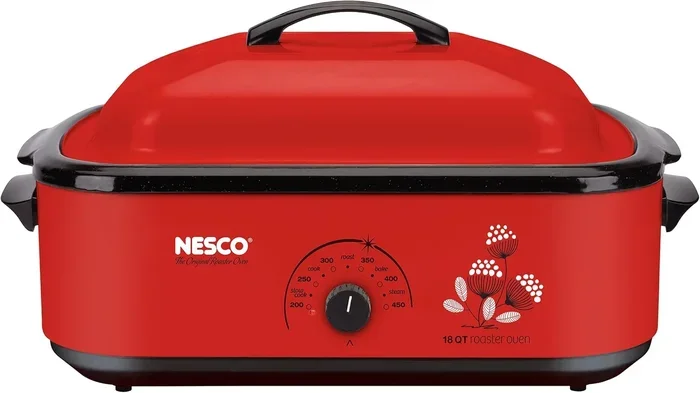
Visual guide about nesco roaster oven
Image source: m.media-amazon.com
Roasting is where the Nesco truly shines. The domed lid creates a self-basting environment that locks in moisture and flavor. This means juicier meats and more tender results compared to a conventional oven.
Roasting Meats and Poultry
Place your meat or poultry on the included wire rack inside the roasting pan. The rack elevates the food so hot air circulates underneath. This prevents the bottom from getting soggy and promotes even browning.
For a whole chicken or turkey, season the bird as desired and place it breast-side up on the rack. A four-pound chicken typically takes about one and a half to two hours at 350°F. A larger turkey may need three to four hours depending on size. Always use a meat thermometer to check that the internal temperature reaches 165°F for poultry.
For beef roasts, preheat the roaster to 325°F. Season your roast and place it on the rack. Cook approximately 20 minutes per pound for medium-rare. Let the meat rest for 10 to 15 minutes before slicing.
Roasting Vegetables
Chop your vegetables into uniform pieces. Toss them with olive oil, salt, and your favorite herbs. Spread them on the rack or directly in the roasting pan. Set the temperature to 400°F and cook for 25 to 40 minutes, stirring halfway through.
Vegetables that roast beautifully in a Nesco include potatoes, carrots, Brussels sprouts, cauliflower, and bell peppers. The even heat distribution gives you caramelized edges and tender centers every time.
Slow Cooking in Your Nesco Roaster Oven
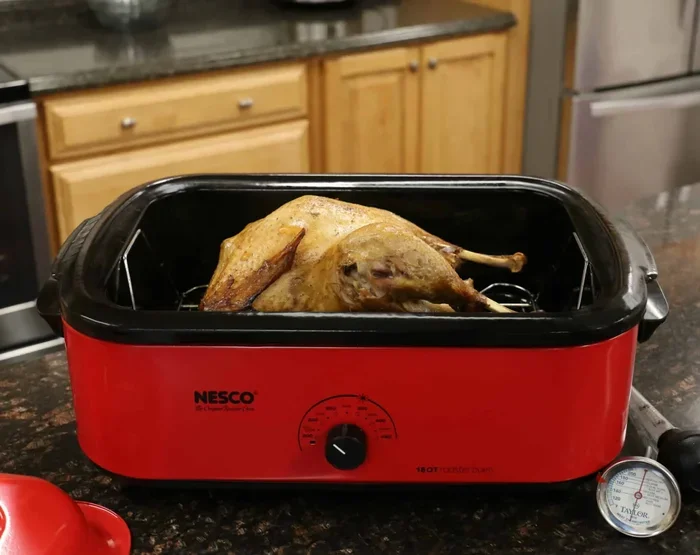
Visual guide about nesco roaster oven
Image source: nesco.com
One of the best features of a Nesco roaster oven is its ability to slow cook. Think of it as a large countertop slow cooker with more temperature flexibility.
Tips for Perfect Slow-Cooked Meals
Set the temperature between 200°F and 250°F for slow cooking. Add your ingredients — whether it’s a pork shoulder, beef stew, or chili — to the roasting pan. You can place food directly in the pan without the rack for slow cooking.
Add your liquid — broth, wine, or sauce — to keep everything moist during the long cooking process. Cover with the lid and let it go. Most slow-cooked dishes need four to eight hours at these low temperatures.
A great trick is to sear your meat in a skillet first, then transfer it to the roaster. This adds a deep, rich flavor that you can’t get from slow cooking alone.
Baking with a Nesco Roaster Oven
Yes, you can bake in a Nesco roaster oven! It handles casseroles, cookies, brownies, and even small cakes surprisingly well.
Baking Casseroles and Side Dishes
Casseroles are a natural fit. Prepare your casserole as usual, place the dish on the rack inside the roaster, and bake at 350°F. Cooking times are similar to a conventional oven, though you may need to add a few extra minutes since the heat source is on top.
Lasagna, mac and cheese, and scalloped potatoes all turn out beautifully. The top gets golden and bubbly while the inside stays creamy and hot.
Baking Cookies and Desserts
For cookies, place a baking sheet or oven-safe dish on the rack. Bake at 350°F for about 10 to 13 minutes. Keep an eye on them — the top-down heat source can brown the tops faster than the bottoms.
Brownies, cornbread, and coffee cake also work well. Use an oven-safe dish that fits comfortably inside the roasting pan without touching the lid.
If you want to explore more baking techniques, check out our guide on baking cookies in an oven for additional tips that apply to roaster ovens too.
Cleaning and Maintenance Tips
Keeping your Nesco roaster oven clean ensures it performs well for years. Fortunately, cleaning is straightforward.
After Every Use
Let the roaster cool completely before cleaning. Remove the racks and wash them in warm soapy water. The roasting pan can also be washed with soap and water. If food is stuck, let it soak for 15 to 20 minutes first.
Wipe the lid with a damp cloth. Never submerge the lid in water because it contains the heating element. For stubborn residue on the lid’s interior, use a non-abrasive scrub pad.
The heating base should only be wiped with a damp cloth. Never immerse it in water or run it under the faucet. This is the most important safety rule to remember.
Deep Cleaning Periodically
Every few weeks, give your roaster a deeper clean. Check the vent openings on the lid for any food debris or grease buildup. Use a soft brush or toothpick to clear them.
If your roasting pan has a non-stick coating, avoid using metal utensils or abrasive cleaners. These can scratch the surface and reduce its non-stick properties over time.
For more detailed cleaning advice, take a look at our article on cleaning oven interiors safely.
Common Mistakes to Avoid
Even experienced cooks make mistakes with roaster ovens. Here are the most common ones and how to avoid them:
- Not preheating: Skipping the preheat step leads to uneven cooking and longer cook times. Always give it 15 to 20 minutes.
- Overcrowding the pan: Leave space around your food for air circulation. Overcrowding causes steaming instead of roasting.
- Opening the lid too often: Every time you lift the lid, you lose significant heat. Trust the process and resist the urge to peek.
- Using the wrong rack position: For roasting, always use the rack. For slow cooking or casseroles, you can cook directly in the pan.
- Ignoring the resting time: Meats need to rest after cooking. This allows the juices to redistribute for maximum flavor.
Advanced Cooking Techniques
Once you’ve mastered the basics, try these advanced methods to get even more from your Nesco roaster oven.
Steaming
You can steam vegetables, fish, and dumplings in your roaster. Add about an inch of water to the bottom of the roasting pan. Place your food on the rack above the water. Set the temperature to 212°F (the boiling point of water). Cover with the lid and let the steam do the work.
Dehydrating
Some Nesco models come with dehydrating accessories, but you can improvise. Set the temperature to its lowest setting (around 150°F). Slice fruits, vegetables, or jerky strips thinly and arrange them on the rack. Leave the lid slightly cracked to allow moisture to escape. Dehydrating takes six to twelve hours depending on the food.
Braising
Braising combines searing and slow cooking. First, sear your meat in a hot skillet. Then transfer it to the roaster with liquid — broth, tomatoes, or wine. Set the temperature to 250°F and cook for three to five hours. The result is fall-apart tender meat in a rich, flavorful sauce.
Comparison: Nesco Roaster Oven vs. Conventional Oven
| Feature | Nesco Roaster Oven | Conventional Oven |
|---|---|---|
| Energy Use | Uses about half the energy | Higher energy consumption |
| Preheat Time | 15-20 minutes | 20-30 minutes |
| Capacity | Up to 22 quarts (large models) | Full-size, larger capacity |
| Portability | Portable, countertop use | Built-in, stationary |
| Versatility | Roast, bake, slow cook, steam, dehydrate | Bake, roast, broil |
| Heat Distribution | Top-down heating element | Top and bottom elements |
| Price Range | $50-$150 | $500-$3,000+ |
As you can see, the Nesco roaster oven holds its own against a conventional oven in many categories. It’s more energy-efficient, more portable, and significantly more affordable. For everyday cooking, it’s often the smarter choice.
Delicious Recipe Ideas to Try
Here are some easy recipes to get you started with your Nesco roaster oven:
Classic Roasted Chicken
Season a whole chicken with salt, pepper, garlic powder, and paprika. Rub with olive oil. Place on the rack at 350°F for about two hours. The skin gets crispy while the meat stays incredibly juicy.
Slow-Cooker-Style Pulled Pork
Rub a pork shoulder with your favorite dry rub. Place in the roaster with a cup of apple cider vinegar and a cup of barbecue sauce. Cook at 250°F for six to eight hours. Shred with two forks and serve on buns.
Roasted Vegetable Medley
Toss potatoes, carrots, onions, and zucchini with olive oil, rosemary, and thyme. Roast at 400°F for 35 minutes. Stir once halfway through. The vegetables come out perfectly caramelized.
Homemade Lasagna
Layer noodles, ricotta, mozzarella, meat sauce, and Parmesan in an oven-safe dish. Place the dish on the rack and bake at 350°F for 45 minutes. Let it rest for 10 minutes before serving.
Conclusion
Using a Nesco roaster oven is one of the easiest ways to expand your cooking capabilities without investing in expensive equipment. From roasting meats and baking casseroles to slow cooking stews and steaming vegetables, this countertop appliance handles it all with impressive results.
The key takeaways are simple: always preheat, use the right temperature for your cooking method, don’t overcrowd the pan, and clean it properly after each use. Once you build confidence with the basics, you’ll discover just how versatile and convenient a Nesco roaster oven can be.
So go ahead — pull that roaster oven out of the cabinet and put it to work. Your taste buds (and your electricity bill) will thank you.